CD366 (TIM3) Monoclonal Antibody (F38-2E2), FITC, eBioscience™, Invitrogen™
Mouse Monoclonal Antibody
Manufacturer: Fischer Scientific
The price for this product is unavailable. Please request a quote
Antigen
CD366 (TIM3)
Concentration
5 μL/Test
Classification
Monoclonal
Form
Liquid
Regulatory Status
RUO
Formulation
PBS with 0.2% BSA and 0.09% sodium azide; pH 7.2
Gene Alias
CD366; FLJ14428; Havcr2; HAVcr-2; Hepatitis A virus cellular receptor 2; hepatitis A virus cellular receptor 2 homolog; kidney injury molecule-3; KIM-3; sCD366; soluble CD366; soluble TIM 3; T cell immunoglobulin mucin 3; T cell immunoglobulin mucin-3; T-cell immunoglobulin and mucin domain containing 3; T-cell immunoglobulin and mucin domain-containing protein 3; T-cell immunoglobulin mucin family member 3; T-cell immunoglobulin mucin receptor 3; T-cell membrane protein 3; Tim3; TIM-3; TIMD3; TIMD-3
Gene Symbols
Havcr2
Primary or Secondary
Primary
Content And Storage
4° C, store in dark, DO NOT FREEZE!
Gene
Havcr2
Clone
F38-2E2
Applications
Flow Cytometry
Conjugate
FITC
Host Species
Mouse
Target Species
Human
Gene Accession No.
Q8TDQ0
Gene ID (Entrez)
84868
Isotype
IgG1 κ
Purification Method
Affinity chromatography
Product Type
Antibody
Related Products


Description
- Description: This F38-2E2 monoclonal antibody reacts with human CD366, also known as T cell immunoglobulin and mucin domain-containing protein 3 (TIM3) or HAVCR2
- This cell surface receptor is expressed on activated CD4+ T cell subsets (e.g
- Th1, Th17, and Treg), CD8+ T cells, monocytes, dendritic cells, and mast cells
- Due to alternative splicing, CD366 exists as membrane-bound and soluble forms
- Galectin-9 has been identified as the ligand for CD366
- In humans, this receptor negatively regulates CD4+ T cells, influencing the secretion of some Th1- and Th17-related cytokines
- CD366 has also been implicated in tolerance, autoimmune disease (e.g
- multiple sclerosis), and HIV infection
- Applications Reported: This F38-2E2 antibody has been reported for use in flow cytometric analysis
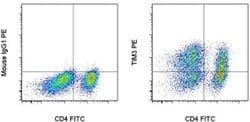
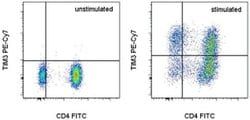
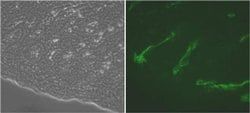
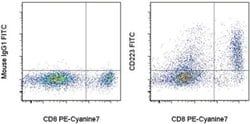
- Applications Tested: This F38-2E2 antibody has been pre-titrated and tested by flow cytometric analysis of stimulated normal human peripheral blood cells
- This can be used at 5 μL (0.125 μg) per test
- A test is defined as the amount (μg) of antibody that will stain a cell sample in a final volume of 100 μL
- Cell number should be determined empirically but can range from 10^5 to 10^8 cells/test
- Excitation: 488 nm; Emission: 520 nm; Laser: Blue Laser
- Filtration: 0.2 μm post-manufacturing filtered
- TIM3 (Hepatitis A virus cellular receptor 2, HAVCR2, T-cell immunoglobulin, mucin-dmain containing-3) is a 281 amino acid long, Type-1 Th1- specific cell surface glycoprotein expressed on terminally differentiated CD4+Th1 and CD8+Tc1 cells
- TIM3 consists of an IgV-like domain, a mucin-like domain in the extracellular region, and a conserved Tyrosine phosphorylation motif in the cytoplasmic region
- TIM3 is involved in macrophage activation and induction of autoimmune diseases
- Further, TIM3 down-regulates aggressive Th1-mediated immune responses and facilitates in the development of immune tolerance
- Pathological significance of TIM3 has been attributed to Experimental autoimmune encephalomyelitis (EAE), a Th-1 dependent autoimmune disease, and also enhances the severity of experimental autoimmune encephalomyelitis in mice.
Compare Similar Items
Show Difference

Antigen: CD366 (TIM3)
Concentration: 5 μL/Test
Classification: Monoclonal
Form: Liquid
Regulatory Status: RUO
Formulation: PBS with 0.2% BSA and 0.09% sodium azide; pH 7.2
Gene Alias: CD366; FLJ14428; Havcr2; HAVcr-2; Hepatitis A virus cellular receptor 2; hepatitis A virus cellular receptor 2 homolog; kidney injury molecule-3; KIM-3; sCD366; soluble CD366; soluble TIM 3; T cell immunoglobulin mucin 3; T cell immunoglobulin mucin-3; T-cell immunoglobulin and mucin domain containing 3; T-cell immunoglobulin and mucin domain-containing protein 3; T-cell immunoglobulin mucin family member 3; T-cell immunoglobulin mucin receptor 3; T-cell membrane protein 3; Tim3; TIM-3; TIMD3; TIMD-3
Gene Symbols: Havcr2
Primary or Secondary: Primary
Content And Storage: 4° C, store in dark, DO NOT FREEZE!
Gene: Havcr2
Clone: F38-2E2
Applications: Flow Cytometry
Conjugate: FITC
Host Species: Mouse
Target Species: Human
Gene Accession No.: Q8TDQ0
Gene ID (Entrez): 84868
Isotype: IgG1 κ
Purification Method: Affinity chromatography
Product Type: Antibody
Antigen: CD366 (TIM3)
Concentration: 5 μL/Test
Classification: Monoclonal
Form: Liquid
Regulatory Status: RUO
Formulation: PBS with 0.2% BSA and 0.09% sodium azide; pH 7.2
Gene Alias: CD366; FLJ14428; Havcr2; HAVcr-2; Hepatitis A virus cellular receptor 2; hepatitis A virus cellular receptor 2 homolog; kidney injury molecule-3; KIM-3; sCD366; soluble CD366; soluble TIM 3; T cell immunoglobulin mucin 3; T cell immunoglobulin mucin-3; T-cell immunoglobulin and mucin domain containing 3; T-cell immunoglobulin and mucin domain-containing protein 3; T-cell immunoglobulin mucin family member 3; T-cell immunoglobulin mucin receptor 3; T-cell membrane protein 3; Tim3; TIM-3; TIMD3; TIMD-3
Gene Symbols: Havcr2
Primary or Secondary: Primary
Content And Storage: 4° C, store in dark, DO NOT FREEZE!
Gene: Havcr2
Clone: F38-2E2
Applications: Flow Cytometry
Conjugate: PE
Host Species: Mouse
Target Species: Human
Gene Accession No.: Q8TDQ0
Gene ID (Entrez): 84868
Isotype: IgG1 κ
Purification Method: Affinity chromatography
Product Type: Antibody

Antigen: Armenian Hamster IgG
Concentration: 0.5 mg/mL
Classification: __
Form: Liquid
Regulatory Status: RUO
Formulation: PBS with 0.09% sodium azide; pH 7.2
Gene Alias: IgG; Immunoglobulin G; ImmunoglobulinG
Gene Symbols: __
Primary or Secondary: Isotype Control (Primary)
Content And Storage: 4° C, store in dark, DO NOT FREEZE!
Gene: __
Clone: eBio299Arm
Applications: Control, Flow Cytometry, Immunocytochemistry, Immunohistochemistry, Immunohistochemistry
Conjugate: FITC
Host Species: Armenian Hamster
Target Species: Not Applicable
Gene Accession No.: __
Gene ID (Entrez): __
Isotype: IgG
Purification Method: Affinity chromatography
Product Type: __
