Klotho, Rat anti-Human, Clone: KL-115, Millipore Sigma™
Rat Monoclonal Antibody
Manufacturer: Fischer Scientific
The price for this product is unavailable. Please request a quote
Antigen
Klotho
Dilution
Western Blotting Analysis: A represetative lot detected Klotho in Western Blotting applications (Maltare, A., et. al. (2014). Monoclon Antib Immunodiagn Immunoother. 33(6):420-7).Immunocytochemistry Analysis: A represetative lot detected Klotho in Immunocytochemistry applications (Maltare, A., et. al. (2014). Monoclon Antib Immunodiagn Immunoother. 33(6):420-7).Immunoprecipitation Analysis: A represetative lot immunoprecipitated Klotho in Immunoprecipitation applications (Maltare, A., et. al. (2014). Monoclon Antib Immunodiagn Immunoother. 33(6):420-7).
Classification
Monoclonal
Host Species
Rat
Research Discipline
Neuroscience
Formulation
Rat monoclonal antibody in ascites with 0.1% sodium azide with 50% glycerol.
Gene ID (Entrez)
NP_004786
Immunogen
GST-tagged recombinant fragment corresponding to 207 amino acids from the extracellular domain from the N-terminal region of human Klotho.
Primary or Secondary
Primary
Content And Storage
Stable for 1 year at -20°C from date of receipt. Handling Recommendations: Upon receipt and prior to removing the cap, centrifuge the vial and gently mix the solution. Aliquot into microcentrifuge tubes and store at -20°C. Avoid repeated freeze/thaw cycles, which may damage IgG and affect product performance.
Clone
KL-115
Applications
Immunocytochemistry, Immunohistochemistry (Paraffin), Immunoprecipitation, Western Blot
Conjugate
Unconjugated
Regulatory Status
RUO
Target Species
Human
Gene Alias
EC: 3.2.1.31;KL
Gene Symbols
KL
Isotype
IgG2a κ
Purification Method
Unpurified
Description
- Anti-Klotho, clone KL-115, Cat
- No
- MABN2398, is a highly specific rat monoclonal antibody that targets klotho and has been tested in Immunocytochemistry, Immunohistochemistry (Paraffin), Immunoprecipitation, and Western Blotting
- Klotho (UniProt: Q9UEF7; also known as EC: 3.2.1.31) is encoded by the KL gene (Gene ID:9365) in human
- Klotho is a homodimeric, highly N-glycosylated, single-pass type I membrane protein that is present in kidney, placenta, small intestine, and prostate tissue
- In kidney it is predominantly present in cortical renal tubules
- A soluble secreted form (isoform 2, ∽ 64 kDa) is present in serum and cerebrospinal fluid
- The Klotho peptide generated by cleavage of the membrane-bound isoform (Isoform 1) is considered as an anti-aging circulating hormone that is reported to extend life span by inhibiting insulin/IGF1 signaling
- It also acts as a cofactor for interaction of FGF23 with FGF R1, which negatively regulates the activity of 1-alpha-hydroxylase, the rate limiting enzyme in the synthesis of 1,25(OH)2D3
- Klotho is synthesized with a signal peptide (aa 1-33), which is subsequently cleaved off to generate the mature form that has an extracellular domain (aa 31-981), a short transmembrane domain (aa 982-1002), and a short cytoplasmic tail (aa 1003-1012)
- Deficiency of Klotho is reported to shorten life-span in animal models with a myriad of disorders associated with old age, such as arteriosclerosis, osteoporosis, and skin atrophy
- Klotho deficient mice also display severe hyperphosphatemia and soft tissue calcification
- On the contrary, over-expression of Klotho is shown to extend life-span in murine models by about 30% with side effects, such as mild insulin resistance and enhanced resistance to oxidative stress
- Defects in KL gene has been linked to chronic renal failure complications.
Compare Similar Items
Show Difference

Antigen: Klotho
Dilution: Western Blotting Analysis: A represetative lot detected Klotho in Western Blotting applications (Maltare, A., et. al. (2014). Monoclon Antib Immunodiagn Immunoother. 33(6):420-7).Immunocytochemistry Analysis: A represetative lot detected Klotho in Immunocytochemistry applications (Maltare, A., et. al. (2014). Monoclon Antib Immunodiagn Immunoother. 33(6):420-7).Immunoprecipitation Analysis: A represetative lot immunoprecipitated Klotho in Immunoprecipitation applications (Maltare, A., et. al. (2014). Monoclon Antib Immunodiagn Immunoother. 33(6):420-7).
Classification: Monoclonal
Host Species: Rat
Research Discipline: Neuroscience
Formulation: Rat monoclonal antibody in ascites with 0.1% sodium azide with 50% glycerol.
Gene ID (Entrez): NP_004786
Immunogen: GST-tagged recombinant fragment corresponding to 207 amino acids from the extracellular domain from the N-terminal region of human Klotho.
Primary or Secondary: Primary
Content And Storage: Stable for 1 year at -20°C from date of receipt. Handling Recommendations: Upon receipt and prior to removing the cap, centrifuge the vial and gently mix the solution. Aliquot into microcentrifuge tubes and store at -20°C. Avoid repeated freeze/thaw cycles, which may damage IgG and affect product performance.
Clone: KL-115
Applications: Immunocytochemistry, Immunohistochemistry (Paraffin), Immunoprecipitation, Western Blot
Conjugate: Unconjugated
Regulatory Status: RUO
Target Species: Human
Gene Alias: EC: 3.2.1.31;KL
Gene Symbols: KL
Isotype: IgG2a κ
Purification Method: Unpurified

Antigen: HAP1
Dilution: Immunocytochemistry Analysis: A representative lot detected HAP1 in Immunocytochemistry applications (Fujinaga, R., et. al. (2011). Exp. Cell Res. 317(12):1689-700).Immunoprecipitation Analysis: A representative lot immunoprecipitated HAP1 in Immunoprecipitation applications (Fujinaga, R., et. al. (2011). Exp. Cell Res. 317(12):1689-700).Western Blotting Analysis: A representative lot detected HAP1 in Western Blotting applications (Chan, E.Y., et. al (2002). Hum Mol Genet. 11(8):945-59; Tang, T.S., et. al. (2003). Neuron. 39(2):227-39; Torre, E.R., et. al. (2003). J Neurosci Methods. 125(1-2):27-32).
Classification: Monoclonal
Host Species: Mouse
Research Discipline: Neuroscience
Formulation: Purified mouse monoclonal antibody IgG1 in buffer containing 0.1 M Tris-Glycine (pH 7.4), 150 mM NaCl with 0.05% sodium azide.
Gene ID (Entrez): NP_077047.1
Immunogen: GST-tagged recombinant fragment corresponding to 137 amino acids from the internal region of rat Huntingtin-associated protein 1 (HAP1).
Primary or Secondary: Primary
Content And Storage: Stable for 1 year at 2-8°C from date of receipt.
Clone: 1B6
Applications: Immunocytochemistry, Immunoprecipitation, Western Blot
Conjugate: Unconjugated
Regulatory Status: RUO
Target Species: Mouse, Rat
Gene Alias: Huntingtin-associated protein 1
Gene Symbols: Hap1
Isotype: IgG1 κ
Purification Method: Protein G purified
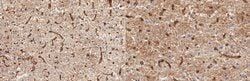
Antigen: Aquaporin-4
Dilution: Western Blotting Analysis: A representative lot detected Aquaporin-4 in Western Blotting applications (Hinson, S.R., et. al. (2017). Proc Natl Acad Sci U S A. 114(21):5491-5496).Immunoprecipitation Analysis: A representative lot immunoprecipitated Aquaporin-4 in Immunoprecipitation applications (Hinson, S.R., et. al. (2017). Proc Natl Acad Sci U S A. 114(21):5491-5496).Immunocytochemistry Analysis: A representative lot detected Aquaporin-4 in Immunocytochemistry applications (Hinson, S.R., et. al. (2017). Proc Natl Acad Sci U S A. 114(21):5491-5496).
Classification: Monoclonal
Host Species: Mouse
Research Discipline: Neuroscience
Formulation: Purified mouse monoclonal antibody IgG3 in PBS without preservatives.
Gene ID (Entrez): NP_001641
Immunogen: His-tagged full length human recombinant Aquaporin-4.
Primary or Secondary: Primary
Content And Storage: Stable for 1 year at -20°C from date of receipt. Handling Recommendations: Upon receipt and prior to removing the cap, centrifuge the vial and gently mix the solution. Aliquot into microcentrifuge tubes and store at -20°C. Avoid repeated freeze/thaw cycles, which may damage IgG and affect product performance.
Clone: mCCD
Applications: Immunocytochemistry, Immunohistochemistry, Immunoprecipitation, Western Blot
Conjugate: Unconjugated
Regulatory Status: RUO
Target Species: Human, Rat, Mouse
Gene Alias: AQP-4;Mercurial-insensitive water channel;MIWC;WCH4
Gene Symbols: AQP4
Isotype: IgG3 κ
Purification Method: Protein G purified