SAB4200634
Monoclonal Anti-GRAMD4 antibody produced in mouse
clone GR4-1, purified from hybridoma cell culture
Manufacturer: Sigma Aldrich
Synonym(S): Death-inducing protein (DIP), GRAM domain containing 4, KIAA0767
Select a Size
| Pack Size | SKU | Availability | Price |
|---|---|---|---|
| 100 μL | SAB4200634-100-μL | In Stock | ₹ 43,234.50 |
SAB4200634 - 100 μL
In Stock
Quantity
1
Base Price: ₹ 43,234.50
GST (18%): ₹ 7,782.21
Total Price: ₹ 51,016.71
biological source
mouse
Quality Level
200
antibody form
purified immunoglobulin
antibody product type
primary antibodies
clone
GR4-1, monoclonal
form
buffered aqueous solution
mol wt
~80 kDa
species reactivity
human, monkey
concentration
~1 mg/mL
technique(s)
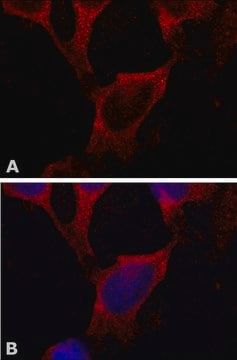
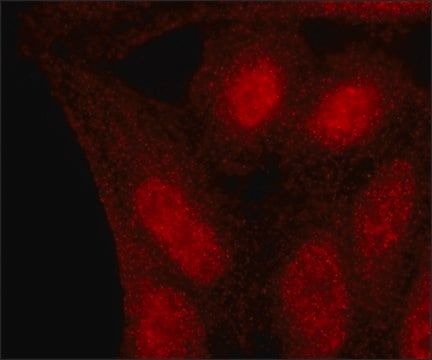
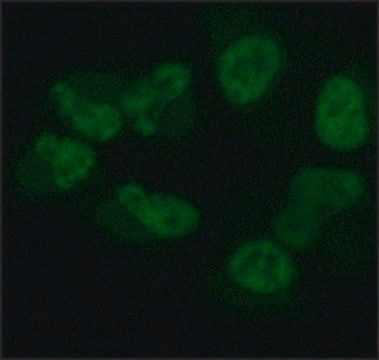
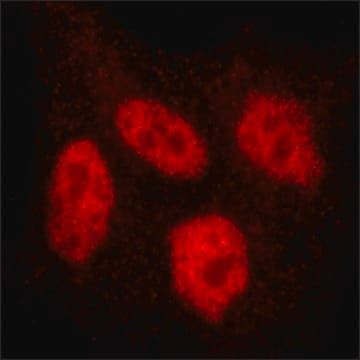
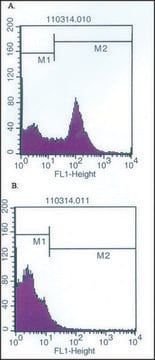
flow cytometry: 2.5-5.0 μg/test using using HeLa cells.immunoblotting: 0.5-1 μg/mL using using whole extracts of Jurkat cells.immunocytochemistry: suitableimmunofluorescence: 2-4 μg/mL using using HeLa cells.
Related Products



Description
- General description: Monoclonal Anti-GRAMD4 (mouse IgG1 isotype) is derived from the hybridoma GR4-1 produced by the fusion of mouse myeloma cells and splenocytes from BALB/c mice immunized with a synthetic peptide. GRAM domain containing 4 (GRAMD4) is localized in the nucleus and is mapped to human chromosome 22q13.31.
- Specificity: Monoclonal Anti-GRAMD4 recognizes human and monkey GRAMD4.
- Immunogen: synthetic peptide corresponding to a sequence at the N-terminal region of human GRAMD4
- Application: Monoclonal Anti-GRAMD4 antibody produced in mouse has been used in:immunoblottingimmunocytochemistryflow cytometry
- Biochem/physiol Actions: GRAM domain containing 4 (GRAMD4) also known as DIP (Death-inducing protein), is a novel p53- independent pro-apoptotic target of E2F Transcription Factor 1 (E2F1), which localizes to the nucleus. Upregulation of GRAMD4 by E2F1 mediates apoptosis in karyotypically normal fibroblasts and tumor cells. GRAMD4 translocation to the mitochondria is mediated by p73- induced apoptosis. It interacts with B-cell lymphoma 2 (Bcl-2), promotes BCL2 associated X, apoptosis regulator (Bax) mitochondrial relocalization and oligomerization. It induces mitochondrial membrane permeabilization mediating the release of cytochrome c and second mitochondria-derived activator of caspases (Smac). Interestingly, GRAMD4 overexpression inhibits tumor growth. Its efficacy was more pronounced over time when combined with cisplatin, leading to prolonged growth retardation.
- Physical form: Solution in 0.01 M phosphate buffered saline, pH 7.4, containing 15 mM sodium azide.
- Storage and Stability: For extended storage, freeze at -20 °Cin working aliquots. Repeated freezing and thawing,or storage in “frost-free” freezers,is not recommended. If slight turbidity occurs upon prolonged storage, clarify the solution by centrifugation before use. Working dilution samples should be discarded if not used within 12 hours.
- Disclaimer: Unless otherwise stated in our catalog or other company documentation accompanying the product(s), our products are intended for research use only and are not to be used for any other purpose, which includes but is not limited to, unauthorized commercial uses, in vitro diagnostic uses, ex vivo or in vivo therapeutic uses or any type of consumption or application to humans or animals.
SAFETY INFORMATION
WGK
WGK 1
Flash Point(F)
Not applicable
Flash Point(C)
Not applicable
Compare Similar Items
Show Difference
biological source: mouse
Quality Level: 200
antibody form: purified immunoglobulin
antibody product type: primary antibodies
clone: GR4-1, monoclonal
form: buffered aqueous solution
mol wt: ~80 kDa
species reactivity: human, monkey
concentration: ~1 mg/mL
technique(s): flow cytometry: 2.5-5.0 μg/test using using HeLa cells.immunoblotting: 0.5-1 μg/mL using using whole extracts of Jurkat cells.immunocytochemistry: suitableimmunofluorescence: 2-4 μg/mL using using HeLa cells.
biological source:
mouse
Quality Level:
200
antibody form:
purified immunoglobulin
antibody product type:
primary antibodies
clone:
GR4-1, monoclonal
form:
buffered aqueous solution
mol wt:
~80 kDa
species reactivity:
human, monkey
concentration:
~1 mg/mL
technique(s):
flow cytometry: 2.5-5.0 μg/test using using HeLa cells.immunoblotting: 0.5-1 μg/mL using using whole extracts of Jurkat cells.immunocytochemistry: suitableimmunofluorescence: 2-4 μg/mL using using HeLa cells.
biological source: rat
Quality Level: 200
antibody form: purified immunoglobulin
antibody product type: primary antibodies
clone: 3E7C7, monoclonal
form: __
mol wt: ~250 kDa
species reactivity: rat, canine, mouse, human, monkey
concentration: ~1 mg/mL
technique(s): flow cytometry: 10 μg/test using using HeLa cells.immunoblotting: 0.25-0.5 μg/mL using whole extracts of HeLa cells.immunofluorescence: 4-8 μg/mL using using A549 cells
biological source:
rat
Quality Level:
200
antibody form:
purified immunoglobulin
antibody product type:
primary antibodies
clone:
3E7C7, monoclonal
form:
__
mol wt:
~250 kDa
species reactivity:
rat, canine, mouse, human, monkey
concentration:
~1 mg/mL
technique(s):
flow cytometry: 10 μg/test using using HeLa cells.immunoblotting: 0.25-0.5 μg/mL using whole extracts of HeLa cells.immunofluorescence: 4-8 μg/mL using using A549 cells
biological source: mouse
Quality Level: 200
antibody form: purified immunoglobulin
antibody product type: primary antibodies
clone: ORF.4, monoclonal
form: buffered aqueous solution
mol wt: __
species reactivity: human
concentration: ~1 mg/mL
technique(s): flow cytometry: 10 μg/test using human plateletsimmunohistochemistry: suitable
biological source:
mouse
Quality Level:
200
antibody form:
purified immunoglobulin
antibody product type:
primary antibodies
clone:
ORF.4, monoclonal
form:
buffered aqueous solution
mol wt:
__
species reactivity:
human
concentration:
~1 mg/mL
technique(s):
flow cytometry: 10 μg/test using human plateletsimmunohistochemistry: suitable
biological source: mouse
Quality Level: 200
antibody form: purified immunoglobulin
antibody product type: primary antibodies
clone: ALIX-1, monoclonal
form: buffered aqueous solution
mol wt: __
species reactivity: human
concentration: ~1 mg/mL
technique(s): flow cytometry: 5-10 μg/test using using human MOLT4 cellsimmunoblotting: 2-5 μg/mL using using whole extracts of human MOLT4 cells.immunofluorescence: 10-20 μg/mL using using human HeLa cellsimmunoprecipitation (IP): 10-20 μg/mL using using lysates of human MOLT4 cells.
biological source:
mouse
Quality Level:
200
antibody form:
purified immunoglobulin
antibody product type:
primary antibodies
clone:
ALIX-1, monoclonal
form:
buffered aqueous solution
mol wt:
__
species reactivity:
human
concentration:
~1 mg/mL
technique(s):
flow cytometry: 5-10 μg/test using using human MOLT4 cellsimmunoblotting: 2-5 μg/mL using using whole extracts of human MOLT4 cells.immunofluorescence: 10-20 μg/mL using using human HeLa cellsimmunoprecipitation (IP): 10-20 μg/mL using using lysates of human MOLT4 cells.