SAB4200637
Monoclonal Anti-phospho-RNA polymerase II CTD (pSer2) antibody produced in rat
clone 3E7C7, purified from hybridoma cell culture
Manufacturer: Sigma Aldrich
Synonym(S): POLR2, POLRA, RPB1, RPBh1, RPO2, RPOL2, RpIILS, hRPB220, hsRPB1, polymerase (RNA) II (DNA directed) polypeptide A 220kDa (POLR2A)
Select a Size
| Pack Size | SKU | Availability | Price |
|---|---|---|---|
| 100 μL | SAB4200637-100-μL | In Stock | ₹ 53,113.50 |
SAB4200637 - 100 μL
In Stock
Quantity
1
Base Price: ₹ 53,113.50
GST (18%): ₹ 9,560.43
Total Price: ₹ 62,673.93
biological source
rat
Quality Level
200
antibody form
purified immunoglobulin
antibody product type
primary antibodies
clone
3E7C7, monoclonal
mol wt
~250 kDa
species reactivity
rat, canine, mouse, human, monkey
concentration
~1 mg/mL
technique(s)
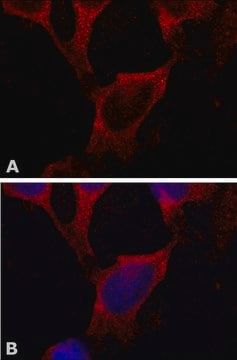
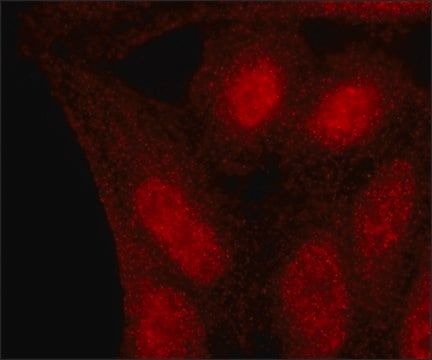
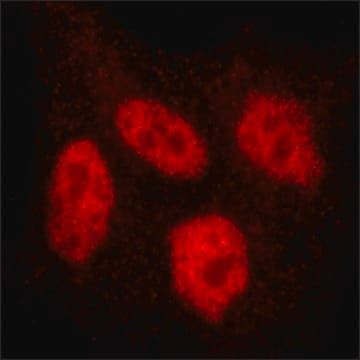
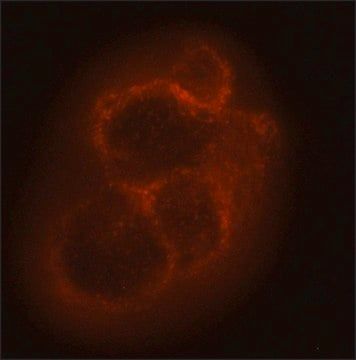
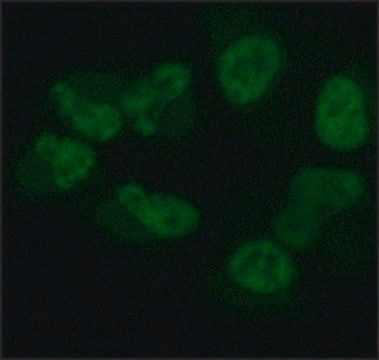
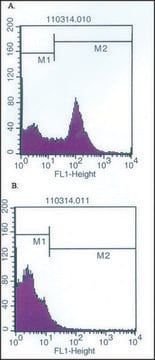
flow cytometry: 10 μg/test using using HeLa cells.immunoblotting: 0.25-0.5 μg/mL using whole extracts of HeLa cells.immunofluorescence: 4-8 μg/mL using using A549 cells
isotype
IgG2a
Related Products


Description
- General description: Monoclonal Anti-phospho-RNA polymerase II CTD (pSer2 ) (rat IgG2a isotype) is derived from the hybridoma 3E7C7 produced by the fusion of mouse myeloma cells and lymph node cells from rat immunized with a synthetic peptide containing phospho-Ser2 of human RNA Polymerase II CTD repeat. RNA polymerase II subunit A (RNAPII), also known as POLR2A, is the largest subunit of RNA polymerase II. The POLR2A gene is mapped to human chromosome 17p13.1. This polymerase contains a carboxy-terminal domain (CTD) composed of heptapeptide repeats. These repeats contain serine and threonine residues that are phosphorylated in actively transcribing RNA polymerase.
- Specificity: Monoclonal Anti-RNA polymerase II CTD (pSer2) recognizes specifically phospho-Ser2 RNAPII but not phosphor-Ser5 or phosphor-Ser7.
- Immunogen: synthetic peptide containing phospho-Ser2 of human RNA Polymerase II CTD repeat.
- Application: Monoclonal Anti-phospho-RNA polymerase II CTD (pSer2) antibody produced in rat may be used in: immunoblottingimmunofluorescenceflow cytometry
- Biochem/physiol Actions: RNA polymerase II subunit A (RNAPII) is responsible for synthesizing messenger RNA in eukaryotes. The carboxy-terminal domain (CTD) is essential for polymerase activity. The CTD mediates the coupling of transcription and processing of the nascent RNA. It also plays roles in transcription, elongation and termination. Also, this subunit, in combination with several other polymerase subunits, forms the DNA binding domain of the polymerase, a groove in which the DNA template is transcribed into RNA. CTD is being dynamically modified during the transcription cycle. The phosphorylation of serine is needed for RNA capping and splicing factors recruitment.
- Physical form: Solution in 0.01 M phosphate buffered saline, pH 7.4, containing 15 mM sodium azide.
- Storage and Stability: For extended storage, freeze at -20 0C in working aliquots. Repeated freezing and thawing or storage in “frost-free” freezers is not recommended. If slight turbidity occurs upon prolonged storage, clarify the solution by centrifugation before use. Working dilution samples should be discarded if not usedwithin 12 hours.
- Disclaimer: Unless otherwise stated in our catalog or other company documentation accompanying the product(s), our products are intended for research use only and are not to be used for any other purpose, which includes but is not limited to, unauthorized commercial uses, in vitro diagnostic uses, ex vivo or in vivo therapeutic uses or any type of consumption or application to humans or animals.
SAFETY INFORMATION
WGK
WGK 1
Flash Point(F)
Not applicable
Flash Point(C)
Not applicable
Compare Similar Items
Show Difference
biological source: rat
Quality Level: 200
antibody form: purified immunoglobulin
antibody product type: primary antibodies
clone: 3E7C7, monoclonal
mol wt: ~250 kDa
species reactivity: rat, canine, mouse, human, monkey
concentration: ~1 mg/mL
technique(s): flow cytometry: 10 μg/test using using HeLa cells.immunoblotting: 0.25-0.5 μg/mL using whole extracts of HeLa cells.immunofluorescence: 4-8 μg/mL using using A549 cells
isotype: IgG2a
biological source:
rat
Quality Level:
200
antibody form:
purified immunoglobulin
antibody product type:
primary antibodies
clone:
3E7C7, monoclonal
mol wt:
~250 kDa
species reactivity:
rat, canine, mouse, human, monkey
concentration:
~1 mg/mL
technique(s):
flow cytometry: 10 μg/test using using HeLa cells.immunoblotting: 0.25-0.5 μg/mL using whole extracts of HeLa cells.immunofluorescence: 4-8 μg/mL using using A549 cells
isotype:
IgG2a
biological source: mouse
Quality Level: 200
antibody form: purified immunoglobulin
antibody product type: primary antibodies
clone: ORF.4, monoclonal
mol wt: __
species reactivity: human
concentration: ~1 mg/mL
technique(s): flow cytometry: 10 μg/test using human plateletsimmunohistochemistry: suitable
isotype: IgG1
biological source:
mouse
Quality Level:
200
antibody form:
purified immunoglobulin
antibody product type:
primary antibodies
clone:
ORF.4, monoclonal
mol wt:
__
species reactivity:
human
concentration:
~1 mg/mL
technique(s):
flow cytometry: 10 μg/test using human plateletsimmunohistochemistry: suitable
isotype:
IgG1
biological source: mouse
Quality Level: 200
antibody form: purified immunoglobulin
antibody product type: primary antibodies
clone: ALIX-1, monoclonal
mol wt: __
species reactivity: human
concentration: ~1 mg/mL
technique(s): flow cytometry: 5-10 μg/test using using human MOLT4 cellsimmunoblotting: 2-5 μg/mL using using whole extracts of human MOLT4 cells.immunofluorescence: 10-20 μg/mL using using human HeLa cellsimmunoprecipitation (IP): 10-20 μg/mL using using lysates of human MOLT4 cells.
isotype: IgG1
biological source:
mouse
Quality Level:
200
antibody form:
purified immunoglobulin
antibody product type:
primary antibodies
clone:
ALIX-1, monoclonal
mol wt:
__
species reactivity:
human
concentration:
~1 mg/mL
technique(s):
flow cytometry: 5-10 μg/test using using human MOLT4 cellsimmunoblotting: 2-5 μg/mL using using whole extracts of human MOLT4 cells.immunofluorescence: 10-20 μg/mL using using human HeLa cellsimmunoprecipitation (IP): 10-20 μg/mL using using lysates of human MOLT4 cells.
isotype:
IgG1

biological source: mouse
Quality Level: 200
antibody form: purified immunoglobulin
antibody product type: primary antibodies
clone: 5C5, monoclonal
mol wt: antigen ~42 kDa
species reactivity: rat, chicken, bovine, mouse, guinea pig, rabbit, human, planaria(flatworm), fish, Xenopus
concentration: __
technique(s): ELISA: suitableimmunoblotting: 1:500-1:1000 using rat heart tissue extractsimmunofluorescence: 1:500-1000 using human HeLa cells.immunohistochemistry: 1:500 using formalin-fixed, paraffin-embedded human tongue sections and Biotin/ExtrAvidin®-Peroxidase staining system.
isotype: __
biological source:
mouse
Quality Level:
200
antibody form:
purified immunoglobulin
antibody product type:
primary antibodies
clone:
5C5, monoclonal
mol wt:
antigen ~42 kDa
species reactivity:
rat, chicken, bovine, mouse, guinea pig, rabbit, human, planaria(flatworm), fish, Xenopus
concentration:
__
technique(s):
ELISA: suitableimmunoblotting: 1:500-1:1000 using rat heart tissue extractsimmunofluorescence: 1:500-1000 using human HeLa cells.immunohistochemistry: 1:500 using formalin-fixed, paraffin-embedded human tongue sections and Biotin/ExtrAvidin®-Peroxidase staining system.
isotype:
__